Deepseawaters News
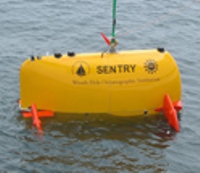
Robot Vehicle Surveys Deep Sea Off Pacific Northwest
Funding for the development of Sentry also was provided by the Russell Family Foundation, WHOI's Deep Ocean Exploration Institute, the Comer Science and Education Foundation, and WHOI's Access to the Sea program. Funding for the OOI mapping cruise was provided by NSF through the Consortium for Ocean .....
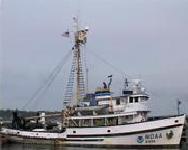
NOAA's Oldest Ship, John N. Cobb has Retired
NOAA ship John N. Cobb, the oldest and only wooden hulled ship in the NOAA fleet, was decommissioned on August 13,2008 in Seattle after 58 years of service.The 93-foot fisheries research vessel began service in 1950 with the Bureau of Fisheries, predecessor to NOAA's Fisheries Service,conducting .......
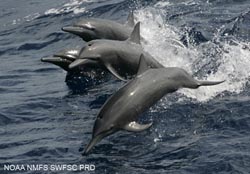
The European Fisheries Fund (EFF) is intended to help secure a sustainable and profitable fisheries industry. It will grant financial support during the period 2007 to 2013, with a view to help the industry adapt to changing circumstances.Council Regulation.....
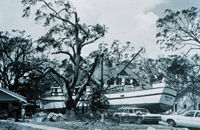
NOAA Historical Hurricane Tracks Web Site Helps People Prepare for Big Storms
As the U.S. coastal population continues to grow, so do the hazards when big storms approach. Now, an on-line tool, Historical Hurricane Tracks, helps users get a quick picture of coastal .......
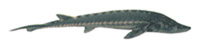
NOAA Proposes Critical Habitat for Southern Population of North American Green Sturgeon
is seeking public comment on a proposal that identifies critical habitat for a distinct group of North American green sturgeon that spawn in California's Sacramento River but migrate along the west coast of Mexico, the United States, and Canada.
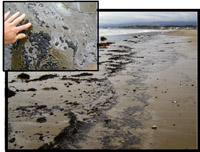
NOAA Awards Santa Barbara Area Environmental Education Grants
NOAA has announced the presentation of seven education grants totaling nearly $374,000 to Santa Barbara Channel area schools and non-profit groups. The grants, part of NOAA's Bay Watershed Education and Training (B-WET) program, will support environmental education projects focused on NOAA's Channel Islands National Marine Sanctuary.
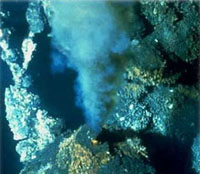
Hot springs on the ocean floor are called hydrothermal vents. The most numerous and spectacular hydrothermal vents are found along world's mid-ocean ridges. The heat source for these springs is the magma (molten rock) beneath the volcanic ridge system. Geothermal activity beneath 2000 to 5000 meters of seawater is markedly different than on land because of the high pressure at the bottom of the ocean.
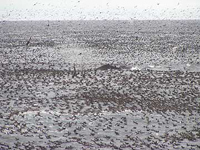
NOAA's Fisheries Service Protects Bering Sea Habitat
Newly closed are Bering Sea Habitat Conservation Area, the largest area covered by the new rule; the St. Lawrence Island Habitat Conservation Area; the St. Matthew Island Habitat Conservation Area; and the Nunivak Island, Etolin Strait, and Kuskokwim Bay Habitat Conservation Area.
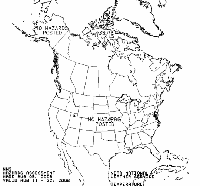
U.S. Temperature Above Normal in July
Heavy rains fell across parts of the Midwest again in July, continuing a trend that began last October. An area from central Iowa through northeastern Missouri and western Illinois accumulated more than twice the normal July rainfall. At Long Branch Reservoir in north central Missouri, 18.64 inches fell - more than three times the normal amount. The heavy rains triggered widespread flash flooding in Missouri and Iowa.
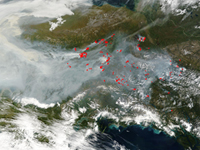
Northern Wildfire Smoke May Cast Shadow on Arctic Warming
"Smoke in the atmosphere temporarily reduces the amount of solar radiation reaching the surface. This transitory effect could partly offset some of the warming caused by the buildup of greenhouse gases and other pollutants," said Robert Stone, an atmospheric scientist with the university and NOAA Cooperative Institute for Research in Environmental Sciences (CIRES).
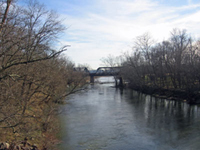
NOAA Deploys "Smart Buoy" Near Mouth of the Rappahannock River
The buoy will be deployed off Stingray Point, near Deltaville, Va., to mark the 400th anniversary of Captain John Smith's exploration of the region. In July 1608, while using a sword to fish in shallow waters near the mouth of the Rappahannock River, Smith was stung by a stingray and nearly died. The peninsula where this incident occurred was later named "Stingray Point."
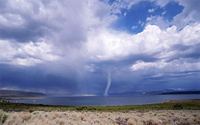
"People are learning so much and are fascinated by climate change these days. Teachers are a key to ensuring that tomorrow's citizens will have the information they need to deal with one of the world's great challenges in an informed way," said Dr. Susan Solomon, senior scientist at the NOAA Earth System Research Laboratory.
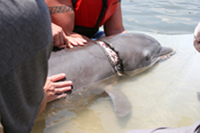
Members of the Southeast Regional Marine Mammal Stranding Network successfully removed a black rubber strap Tuesday that was wrapped around the head of a juvenile bottlenose dolphin, averting a life-threatening injury.
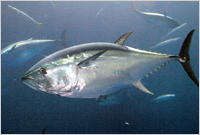
Eastern Pacific Fishing Nations Fail to Conserve Tuna
The IATTC's annual meetings concluded on Friday in Panama without agreement on a plan to conserve yellowfin and bigeye tuna, which have in recent years been subject to overexploitation. The Commission has responsibility for the conservation and management of these shared international fisheries resources, but measures can only be adopted if all Commission members agree.
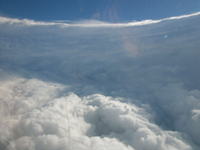
NOAA's Office of Response and Restoration Poised to Respond as Hurricane Season Starts
With the arrival of hurricane season, NOAA's Office of Response and Restoration (OR&R) is prepared to respond quickly to hazardous material spill incidents resulting from severe storm events. OR&R scientists work with federal, state and local agencies to provide scientific support and assistance before, during and after hurricanes strike.
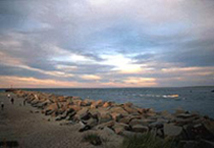
NOAA Proposes Rule to Require Saltwater Angler Registration
The proposed rule satisfies the National Academy of Science National Research Council recommendations to establish a national database of saltwater anglers, and meets the requirements under the Magnuson-Stevens Fishery Conservation and Management Act. The proposed rule is part of a larger initiative of NOAA's Fisheries Service.
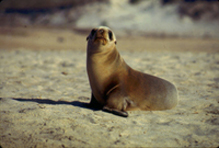
California Sea Lions Seizures May Come From Fetal Domoic Acid Poisoning
Scientists, reporting in the current issue of the online journal Marine Drugs, state that an increase of epileptic seizures and behavioral abnormalities in California sea lions can result from low-dose exposure to domoic acid as a fetus. The findings follow an analysis earlier this year led by Frances Gulland of the California Marine Mammal Center that showed this brain disturbance to be a newly recognized chronic disease.
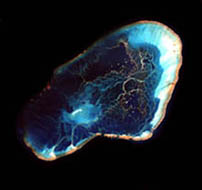
NOAA Launches Online Inventory of Marine Protected Areas
NOAA's National Marine Protected Areas Center, in cooperation with the Department of the Interior, has created a first ever online inventory of the nation's marine protected areas (MPAs). This unique, comprehensive inventory catalogs and classifies marine protected areas within US waters, and was developed with extensive input from state and federal MPA programs, ........
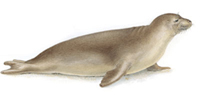
NOAA Confirms Caribbean Monk Seal Extinct
Caribbean monk seals were listed as endangered on March 11, 1967, under the Endangered Species Preservation Act, and relisted under the Endangered Species Act on April 10, 1979. Since then, several efforts have been made to investigate unconfirmed reports of the species in or near the Caribbean Sea, Gulf of Mexico, southern Bahamas, and Greater Antilles.
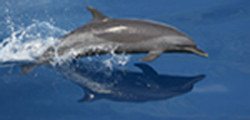
NOAA Study Shows Eastern Tropical Pacific Ocean Dolphin Populations Improving
The numbers of northeastern offshore spotted and eastern spinner dolphins in the eastern tropical Pacific Ocean are increasing after being severely depleted because of accidental death in the tuna purse-seine fishery between 1960 and 1990, according to biologists from NOAA's Fisheries Service.
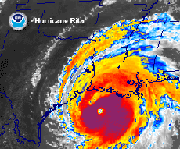
NOAA Predicts Near Normal or Above Normal Atlantic Hurricane Season
NOAA's Climate Prediction Center today announced that projected climate conditions point to a near normal or above normal hurricane season in the Atlantic Basin this year. The prediction was issued at a news conference called to urge residents in vulnerable areas to be fully prepared for the onset of hurricane season, which begins June 1.
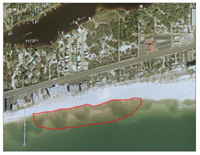
NOAA Teams Up With Local Experts to Restore Alabama Shorelines
NOAA has announced plans to invest $1 million over three years to help restore Alabama's Mobile Bay, partnering with local organizations and citizens to reverse the loss of wetlands caused by coastal development.
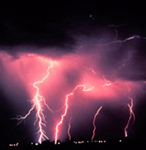
NOAA and Indianapolis Motor Speedway Address Potential Race Day Weather Hazards
Just in time for the 2008 Indianapolis 500, officials from NOAA's Indianapolis National Weather Service office and Indianapolis Motor Speedway have improved awareness, planning and communications for protecting race fans from severe weather.
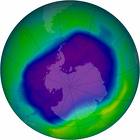
Ozone Hole Recovery Could Reshape Southern Hemisphere Climate Change
As ozone levels recover, the lower stratosphere over the polar region will absorb more ultraviolet radiation from the sun. As a result, intense westerly winds that block air masses from crossing into the continent's interior would weaken, and Antarctica would no longer be isolated from the warming patterns affecting the rest of the world.
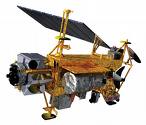
Key Climate Sensor Restored to NPOESS
Secretary of Commerce Carlos M. Gutierrez today declared a commercial fishery failure for the West Coast salmon fishery due to historically low salmon returns. The unprecedented collapse of the salmon population will hit fishermen, their families, and fishing communities hard, and that is why we have moved quickly to declare a fishery disaster," Gutierrez said.
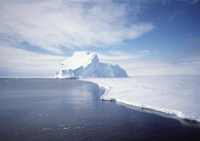
Arctic, Antarctic: Poles Apart in Climate Response
While the Arctic and the Antarctic experience similar greenhouse gas levels and solar radiation, each region responds in a dramatically different way, especially in temperature and loss of sea ice, says an international team of scientists that includes a NOAA oceanographer. While the Arctic is warming, most of Antarctica is not, largely because of the ozone hole, but projections indicate that is likely to change.
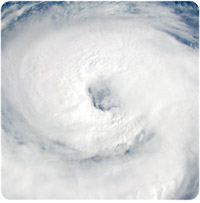
NOAA Historical Hurricane Tracks Web Site Helps Users Prepare for Big Storms
As the U.S. coastal population continues to grow, so do the hazards when big storms approach. Now, an on-line tool, Historical Hurricane Tracks, helps users get a quick picture of coastal areas with the greatest frequency of hurricanes and tropical storms - and that historical "snapshot" can help community members and local emergency managers develop better plans for storm preparation and recovery.
Forecasts Shortage of Marine Scientists
The federal departments of Commerce and Education are forecasting a serious shortage of scientists trained to do the high-quality research required to rebuild fish stocks and restore marine species in the next decade.A new joint report to Congress estimates the nation will need between 180 and 340 new fishery stock assessment scientists in the next 10 years, ...
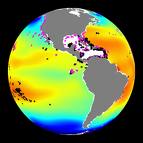
NOAA and NSF Commission National Study of Ocean Acidification
As the U.S. coastal population continues to grow, so do the hazards when big storms approach. Now, an on-line tool, Historical Hurricane Tracks, helps users get a quick picture of coastal areas with the greatest frequency of hurricanes and tropical storms - and that historical "snapshot" can help community members and local emergency managers develop better plans for storm preparation and recovery......
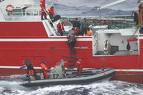
NOAA Fisheries Research Ship Albatross IV is Retired
The NOAA research ship Albatross IV was decommissioned today, ending its distinguished 45-year career in service to the nation. The vessel sailed over 655,000 miles on 453 research cruises, primarily fisheries surveys off the northeastern coast of the United States. These surveys created the world's longest continuous study of fish population data.NOAA's new fisheries survey vessel, the Henry B. Bigelow is replacing the Albatross IV, ensuring the collection of important ecological data goes uninterrupted.
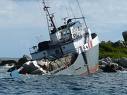
UNH/NOAA Report : Maritime Accidents range in Artic region
The NOAA research ship Albatross IV was decommissioned today, ending its distinguished 45-year career in service to the nation. The vessel sailed over 655,000 miles on 453 research cruises, primarily fisheries surveys off the northeastern coast of the United States. These surveys created the world's longest continuous study of fish population data.NOAA's new fisheries survey vessel, the Henry B. Bigelow is replacing the Albatross IV, ensuring the collection of important ecological data goes uninterrupted.
Sensitive to Sea-level Rise? Climate Changes is to SpeedUp the Sea-Level
The U.S. Environmental Protection Agency, in collaboration with NOAA and U.S. Geological Survey, recently released a report that discusses the impacts of sea-level rise on the coast, coastal communities, and the habitats and species that depend on coastal areas,.......

Award-Winning Technology Improves Air-Drop Targeting
Wind-forecast software from NOAA that improves the target accuracy of an aircraft drop system up to 70 percent and is now being used in both Iraq and Afghanistan has won a federal technology transfer award for four scientists at NOAA's Earth System Research Laboratory...
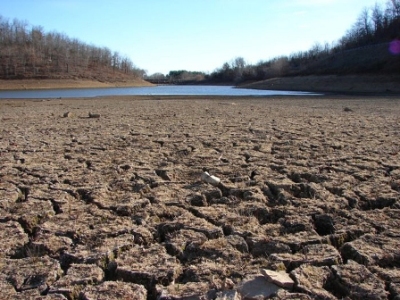
Research funding totaling $3.85 million over five years has been awarded to the University of Oklahoma and Louisiana State University by NOAA's Regional Integrated Sciences and Assessments Program...
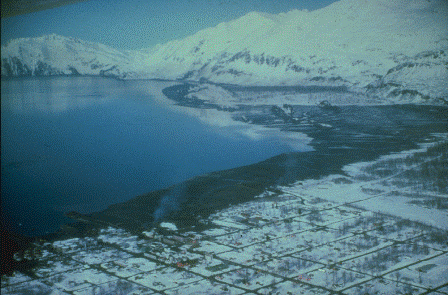
Tsunami - Reading in the Deep Sea
In order to extend alert times and avoid false alarms, a new seafloor pressure recording system has been designed to detect tsunamis shortly after their development in the open ocean. The project is directed by scientists of the working group 'Marine Observation Systems' at the...
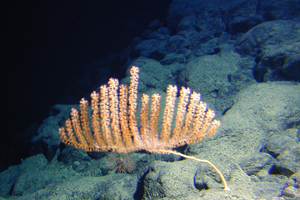
New Deep-Sea Coral Discovered on NOAA-Supported Mission
Scientists identified seven new species of bamboo coral discovered on a NOAA-funded mission in the deep waters of the Papahanaumokuakea Marine National Monument. Six of these species may symbolize entirely new genera, a noteworthy feat given the broad arrangement a sort represents. A genus is a major category in the classification of organisms; place above a group and below a family. Scientists look ahead to to categorize more new sort as analysis of samples continues............
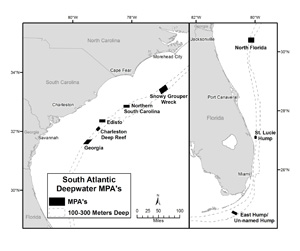
NOAA Establishes Eight Marine Protected Areas to Provide Safe Havens for Deep-Water Fish
NOAA has conventional eight separate marine protected areas encompassing a total of 529 square maritime miles in south Atlantic federal waters to shield deep-water fish species and their habitats from fishing. All fishing for snappers, groupers, tilefishes, grunts, porgies, and sea basses is forbidden throughout the protected areas, which are located off the coast from North Carolina south to Floridsa.
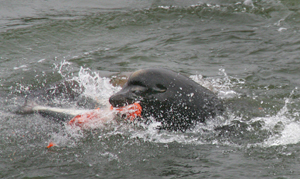
No Evidence of Tampering in Last Year's Sea Lion Deaths at Bonneville
An investigation by NOAA's Fisheries Service into the deaths last May of six sea lions trapped on two floating cages below Bonneville Dam found no evidence of human intervention, either intentional or accidental, in the closing of the cage doors. Once trapped, the animals likely became overheated and died of physical exertion or stress-induced heat prostration

 Deep Sea Crabs
 Deep Sea Shrimps
 Deep Sea Lobsters