NOAA Awards $3.8 Million to Louisiana, Oklahoma Universities for Climate, Drought Assessment, Planning Tools - October 07,2008.
Research funding totaling $3.85 million over five years has been awarded to the University of Oklahoma and Louisiana State University by NOAA's Regional Integrated Sciences and Assessments Program. The funding will be used to assess the risks of climate and drought impacts in their regions, and to develop tools and resources for use by local and regional community managers in their long-range planning.
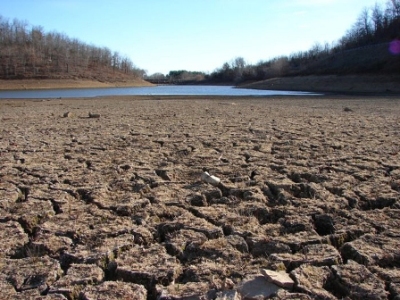
"This effort will provide significant research and leadership for developing decision support tools and information services key to assessing, reducing and managing drought risks," said Roger S. Pulwarty, director of the National Integrated Drought Information System, established by NOAA's Climate Program Office. "Not only will this region benefit but so could other parts of the United States."
Drought is a major issue in the southern United States. Community planners often focus on more dramatic, damaging and life-threatening events, like hurricanes, yet droughts can affect a much larger area, last much longer, displace as many people, and cause long-lasting damage to the environment.
The Oklahoma Climatological Survey, a research unit of the College of Atmospheric and Geographic Sciences at the University of Oklahoma, and Louisiana State University's Department of Geography and Anthropology have been awarded first-year funding totaling $700,000 to establish the ninth and newest RISA project, the Southern Climate Impacts Planning Program.
SCIPP will focus on climate and drought risk assessment, forecasting, and management as it relates to other climate-related hazards in the six-state region of, Arkansas, Louisiana, Mississippi, Oklahoma, Tennessee and Texas. SCIPP is an integral part of the evolution of the NOAA-led National Integrated Drought Information System.
SCIPP will work closely with community managers to develop climate-risk profiles of communities, including risks related to drought, and assessment of how climate change might affect those communities. Community planners will gain access to a unified hazards assessment Web site for drought and climate hazards information to help them assess their risk and adaptation options. SCIPP's approach promotes adaptive behavior so that communities may be better prepared for current and future hazards.

 Deep Sea Crabs
 Deep Sea Shrimps
 Deep Sea Lobsters