Deep Sea Explorations
Integrated Ocean Mapping
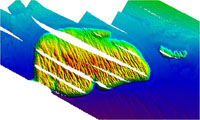
Our expedition takes us to unexplored waters south of the Philippine Islands, in search of the strange, and possibly unknown, fishes, jellyfish, squids and shrimp that live in the dark deep waters of the Celebes Sea. Surrounded by much shallower ocean waters...
Thunder Bay Sinkholes 2008
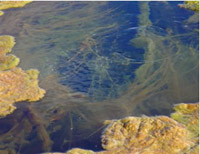
Samples of these microbial mats will also be analyzed for their potential application as pharmaceuticals. A long-term understanding of the groundwater's chemical and physical characteristics such as conductivity (an indication of the presence of ions), temperature, and flow will be obtained from a moored hydrographic instrument array.
Department of Energy to Provide Supercomputing Time to Run NOAA's Climate Change Models
The U.S. Department of Energy's (DOE) Office of Science will make available more than 10 million hours of computing time for the U.S. Commerce Department's National Oceanic and Atmospheric Administration (NOAA) to explore advanced climate change models at three of DOE's national laboratories as part of a three-year memorandum of understanding on collaborative climate research signed today by the two agencies.
Deep Sea Corals
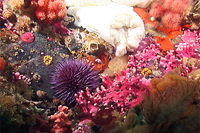
For at least 200 years people who have fished have reported lines becoming entangled in deep-sea trees. These so called trees are thickets of corals that provide essential fish habitat for fish and other marine life. Unlike the shallow tropical coral reefs these corals are found in dark frigid waters often beyond the continental shelf break in many of the world's oceans.
Medicines from the Deep Sea
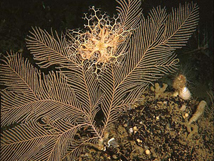
The discovery of novel chemical compounds from deep-sea marine organisms often takes us to new and exciting locations. One of the first steps in planning such an expedition is to thoroughly review the scientific literature about a new target site. This includes reviewing surveys and literature on the biology and geology of a region by environmental consulting firms, government agencies, such as the Minerals Management Service, National Marine Fisheries Service, and U.S. Geological Survey, and various research institutions.
AUVfest 2008: Navy Mine - Hunting Robots help NOAA Explore Sunken History
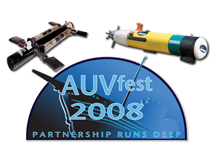
AUVfest 2008 is a unique opportunity to demonstrate and test the applications of autonomous underwater vehicles, or AUVs, for both mine countermeasures and archaeological research. In total, 13 AUV systems are participating in the missions, which will take place in Rhode Island's Narragansett Bay.
2007: Exploring the Inner Space of the Celebes Sea
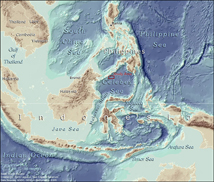
Our expedition takes us to unexplored waters south of the Philippine Islands, in search of the strange, and possibly unknown, fishes, jellyfish, squids and shrimp that live in the dark deep waters of the Celebes Sea. Surrounded by much shallower ocean waters, the Celebes plunges to over 5,000 meters, and in these waters there may well be species that have evolved in isolation from other surrounding waters.
Seeking a Better Understanding of Atmospheric Mercury

The Air Resources Laboratory measures and models atmospheric mercury to provide essential information to policy-makers and planners. Researchers are using their measurement capabilities at three core mercury monitoring sites in a multi-agency national monitoring network designed to address total mercury deposition across the country.
Bonaire 2008: Exploring Coral Reef Sustainability with New Technologies
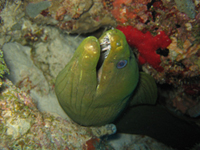
This expedition will use AUVs to survey the most pristine coral reef environment in the Caribbean. Bonaire, Netherlands Antilles, is arguably the most pristine coral reef environment in the Caribbean. Percent coral cover is the highest and percent algal cover the lowest compared to other Caribbean reefs and thus its reef environment represents a baseline against which we can compare other coral reefs.
Fishery Failure Declared for West Coast Salmon Fishery
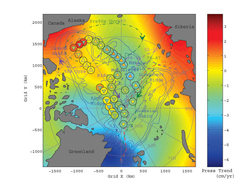
Secretary of Commerce Carlos M. Gutierrez today declared a commercial fishery failure for the West Coast salmon fishery due to historically low salmon returns. The unprecedented collapse of the salmon population will hit fishermen, their families, and fishing communities hard, and that is why we have moved quickly to declare a fishery disaster.

 Deep Sea Crabs
 Deep Sea Shrimps
 Deep Sea Lobsters