How is the health of the lobster resource?
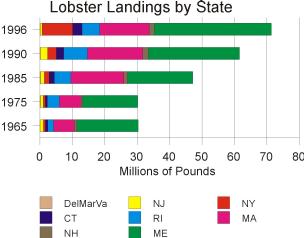
Lobster landings have increased significantly in the last decade; however, the number of traps fished and general efficiency of the fishing industry have also increased. In the Northeast it is one of several fishery resources that is considered to be generally overfished. Fishermen and managers, however, are working together to develop management measures which will help insure adequate egg production to sustain the resource and fishery. Presently major conservation measures include safeguarding lobsters smaller than 3-1/4" carapace length (Carapace length is measured from the rear of the eye socket to the rear of the main body shell). Any lobster that is smaller in carapace length than 3-1/4" must be returned unharmed to the sea. These lobsters are known as "shorts" or "sub-legals".
Egg-bearing females are also protected and if caught, must be placed back in the sea. Lobster traps must have escape vents to allow sublegal size lobsters to exit the trap while it is still on the bottom (they can come in, eat, and leave). Not all "shorts" leave, however, and so the lobsterman must then throw them back when they pull their trap onto the boat. Lobster traps must also have biodegradable escape panels which will create a large opening and neutralize the fishing potential of a lost trap.

 Deep Sea Crabs
 Deep Sea Shrimps
 Deep Sea Lobsters