Basics of Hurricane
The ingredients for a hurricane include a pre-existing weather disturbance, warm tropical oceans, moisture, and relatively light winds aloft. If the right conditions persist long enough, they can combine to produce the violent winds, incredible waves, torrential rains, and floods we associate with this phenomenon.
Each year, an average of ten tropical storms develop over the Atlantic Basin (the Atlantic Ocean, Caribbean Sea, and Gulf of Mexico.) Many of these remain over the ocean and never impact the U.S. coastline. On average, six of these storms become hurricanes each year. In an average 3-year period, roughly five hurricanes strike the US coastline, killing approximately 50 to 100 people anywhere from Texas to Maine. Of these, two are typically "major" or "intense" hurricanes.
The official hurricane season for the Atlantic Basin is from 1 June to 30 November. The peak of the season is from mid-August to late October, however, deadly hurricanes can occur anytime in the hurricane season.
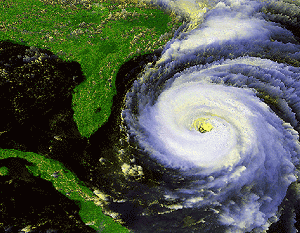
What is a Hurricane?
A hurricane is a type of tropical cyclone, which is a generic term for a low pressure system that generally forms in the tropics. The cyclone is accompanied by thunderstorms and, in the Northern Hemisphere, a counterclockwise circulation of winds near the earth's surface. Tropical cyclones are classified as follows:
Tropical DepressionAn organized system of clouds and thunderstorms with a defined surface circulation and maximum sustained winds* of 38 mph (33 kt**) or less.
Tropical StormAn organized system of strong thunderstorms with a defined surface circulation and maximum sustained winds of 39-73 mph (34-63 kt).
HurricaneAn intense tropical weather system of strong thunderstorms with a well-defined surface circulation and maximum sustained winds of 74 mph (64 kt) or higher.
Hurricanes are categorized according to the strength of their winds using the Saffir-Simpson Hurricane Scale. A Category 1 storm has the lowest wind speeds, while a Category 5 hurricane has the strongest. These are relative terms, because lower category storms can sometimes inflict greater damage than higher category storms, depending on where they strike and the particular hazards they bring. In fact, tropical storms can also produce significant damage and loss of life, mainly due to flooding.
Hurricane Safety
During a hurricane or serious tropical storm it is important to know what to do to keep yourself and your family safe. The National Hurricane Center has resources to help you be prepared.
Basic Hurricane Safety ActionsKnow if you live in an evacuation area. Know your home's vulnerability to storm surge, flooding and wind. Have a written plan based on this knowledge.
At the beginning of hurricane season (June 1st), check the supplies for your disaster supply kit, replace batteries and use food stocks on a rotating basis.
During hurricane season, monitor the tropics.
Monitor NOAA Weather Radio. It is an excellent / official source for real-time weather information and warnings
If a storm threatens, heed the advice from local authorities. Evacuate if ordered.
Execute your family plan
Watch Vs. Warning - Know The DifferenceA HURRICANE WATCH issued for your part of the coast indicates the possibility that you could experience hurricane conditions within 36 hours. This watch should trigger your family's disaster plan, and protective measures should be initiated, especially those actions that require extra time such as securing a boat, leaving a barrier island, etc.
A HURRICANE WARNING issued for your part of the coast indicates that sustained winds of at least 74 mph are expected within 24 hours or less. Once this warning has been issued, your family should be in the process of completing protective actions and deciding the safest location to be during the storm.
Saffir-Simpson Hurricane Scale
The Saffir-Simpson Hurricane Scale is a 1-5 rating based on the hurricane's present intensity. This is used to give an estimate of the potential property damage and flooding expected along the coast from a hurricane landfall. Wind speed is the determining factor in the scale.

 Deep Sea Crabs
 Deep Sea Shrimps
 Deep Sea Lobsters