Caribbean Monk Seal
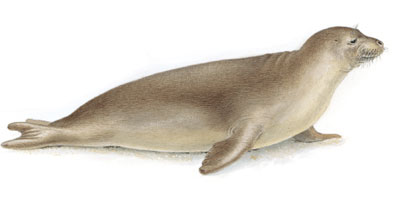
Common Name: Caribbean Monk Seal
Scientific Name: Monachus tropicalis
Description
The Caribbean monk seal, also known as the "West Indian" monk seal, is a phocid or true seal. It was last sighted in 1952 and is considered extinct. This species is related to (same genus, Monachus) the Mediterranean monk seal and Hawaiian monk seal. Both of these species are considered to be critically endangered.
Caribbean monk seals had a fairly large, long, robust body, and could grow up to about 8 ft (2.4 m) in length and weighed 375-600 lbs (170-270 kg). Males were probably slightly larger than females, which is similar to Mediterranean monk seals (Shirihai and Jarrett 2006). Like other monk seals this species had a distinctive head and face. The head was rounded with an extended broad muzzle. The face had relatively large wide-spaced eyes, upward opening nostrils, and fairly big whisker pads with long light-colored and smooth whiskers. When compared to the body, the animal's foreflippers were relatively short with little claws and the hindflippers were slender. Their coloration was brownish and/or grayish, with the underside lighter than the dorsal area. Adults were darker than the more paler and yellowish younger seals. Caribbean monk seals were also known to have algae growing on their pelage, giving them a slightly greenish appearance, which is similar to Hawaiian monk seals.
Historical records suggest that this reclusive species may have "hauled out" at sites (resting areas on land) in large social groups (typically 20-40 animals) of up to 100 individuals throughout its range (Jefferson et al. 2008). The groups may have been organized based on age and life stage differences. Their diet probably consisted of fish and crustaceans.
According to historical records, Caribbean monk seals had a long pupping season, which is typical for pinnipeds living in subtropical and tropical habitats. In Mexico, breeding season peaked in early December. Like other monk seals, this species had four retractable nipples for suckling their young. Newborn pups were probably about 3.3 ft (1 m) in length and weighed 35-40 lbs (16-18 kg) and reportedly had a sleek, black lanugo coat when born (Jefferson et al. 2008).
Habitat
Caribbean monk seals used to be found in warm temperate, subtropical and tropical waters of the Caribbean Sea, Gulf of Mexico, and the west Atlantic Ocean. They probably preferred to haul out at sites (low sandy beaches above high tide) on isolated and secluded atolls and islands, but occasionally would visit the mainland coasts and deeper waters offshore. This species may have fed in shallow lagoons and reefs.
Distribution
Caribbean monk seals had a historical "endemic" widespread range throughout the Caribbean Sea, Gulf of Mexico, and west Atlantic Ocean. In U.S. waters, they used to be found in the tropical West Atlantic, from the Florida Keys and along the coast up to the states of Georgia and South Carolina. In the Gulf of Mexico, their range included the north-east and southern portions (but not the northern and western areas). Their distribution also included the east coast of Central America and north coast of South America. Guyana may have been the easterly extent of their distribution in South America. In the Caribbean, they were known to occur in the Greater and Lesser Antilles, Cuba, Jamaica, and other local waters (Shirihai and Jarrett 2006). There are historical records of breeding grounds in the Bahamas and Yucatan, Mexico (Arrecife Triangulos). Their migration patterns and other movements are not known.
Population Trends
Despite broad and intensive surveys, this species has not been seen since the early 1950s. Sightings of Caribbean monk seals are occasionally reported, but these are most likely harbor seals, harp seals, or hooded seals that have ventured a long distance from their normal habitats. California sea lions have also been reported in the Gulf of Mexico, but these are usually individuals that have escaped from captivity. In March 2008, NMFS completed a five-year status review [pdf] of the species and, based on the best available information, concluded that the species is extinct.
Threats
Caribbean monk seals were killed by hunters beginning when Spanish explorers arrived from Europe (~1494). Besides early explorers, fisherman, sailors, and whalers targeted and/or opportunistically took this species for its fur hides, meat, and oil. Hunters were able to closely approach these seals due to their non-aggressive and tame behavior. They were also captured and killed for display in museums and zoos. Fishing, coastal development and other exploitation activities infringed on these animals, and may have caused them to abandon their critical and vital habitat or depleted their prey resources.

 Deep Sea Crabs
 Deep Sea Shrimps
 Deep Sea Lobsters